The ITV Story

From the TVTimes for 23-29 October 1965

MURIEL YOUNG had “a whale of a time” learning to interview people for TV ready for the opening of Independent Television.

For a country programme she visited a crystal salt works, then a group of home winemakers; finally a mink farm. This proved to be an exciting, frustrating but hilarious experience.

“One of the minks got away, you see,” said Muriel. “And it took us more than two hours to get it back. The scene was a very funny one.

“The mink had hidden itself in a barn. By the time we realised it was there, it had grown dark, so we turned on our camera lights in order to see.

“There we were, cameramen, lighting men, sound men, myself, all scrambling about on the floor or climbing up ladders, carrying nets and prods and goodness knows what else, trying to flush this little blighter from his hiding place and catch him.

“Only when it was over and we’d nabbed him, did it strike us how really funny it all was.”
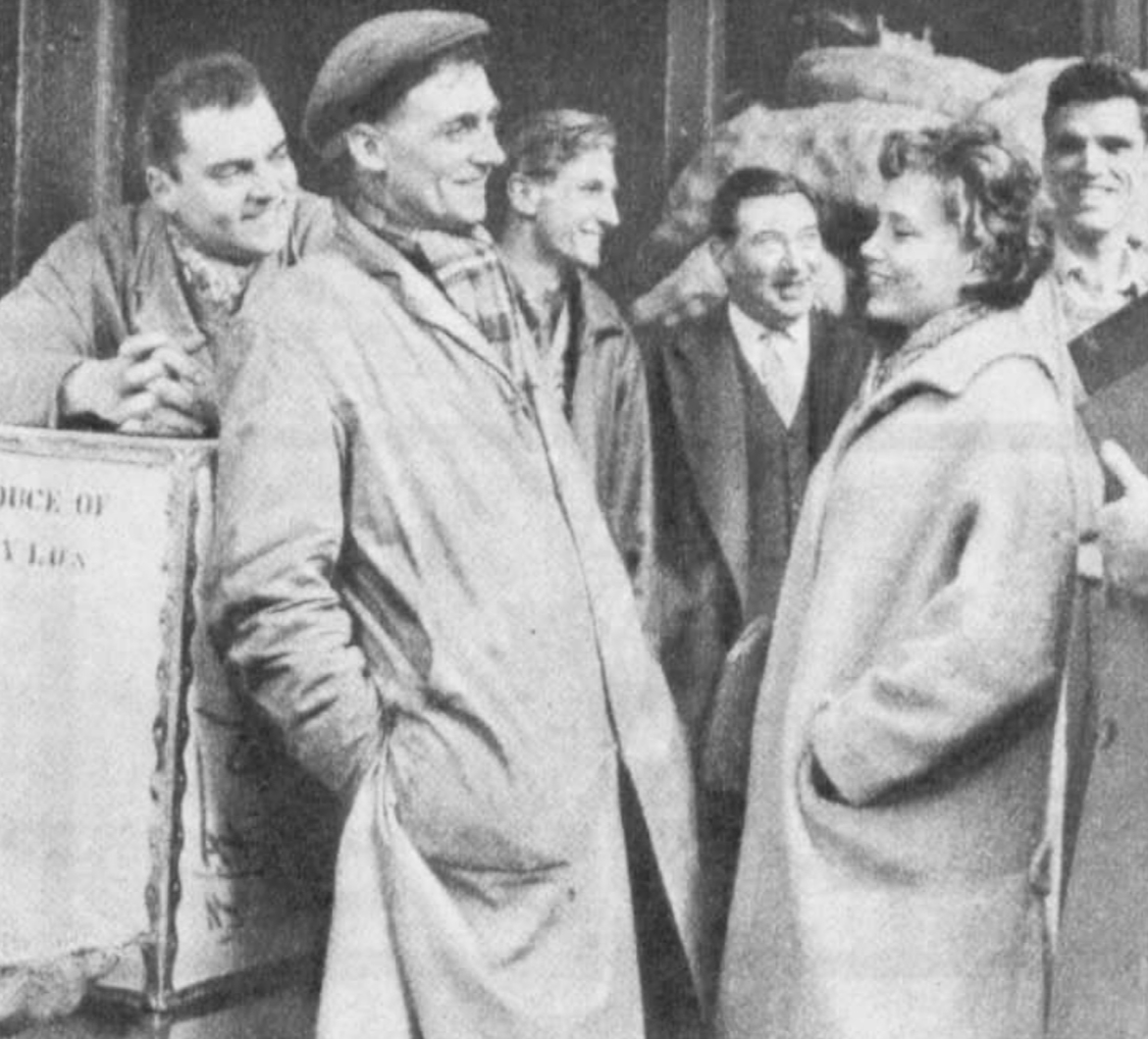
One of Muriel Young’s first interviews… and not a mink in sight

It was a matter of trial and error all the way. It was decided that there should be an O.B. “dummy-run” from a model engineering exhibition being held at London’s Earls Court and Muriel was asked to conduct some interviews. A brigadier who happened to be a model railway enthusiast eventually volunteered to be interviewed on his hobby.

“We had been talking only a second or two,” said Muriel, “when I began getting very strange signals from a member of the production staff. I thought he wanted me to get closer to the brigadier, so I moved in closer.

“The poor man immediately shied away. But I was still getting these signals, so I moved right after him.

“Once again he shied away. But the next time, when I moved closer, I got him in a firm grip and held on to him. And I continued to hold on to him until the interview was finished.

“Imagine my horror when the director called me over at the end of it and snorted rudely: ‘Muriel, you know you must never handle people you’re supposed to be interviewing.’

“But I kept getting signals!” I replied, hurt.

“They weren’t signals,” protested the floor manager. “I was simply winding up my microphone lead so that I wouldn’t trip over it!”

There was another spot of trouble with a different subject.

On Sunday, September 18, 1955, with only seven days before the first Sunday Night at the London Palladium was seen. Bill Ward, Head of ATV’s Light Entertainment, spent the day at Wood Green Empire with his team running through a final rehearsal with all the stars except Gracie Fields, who had promised to fly in from Capri in time for the show.

Most of the rehearsal went like clockwork, for Ward’s team were all ex-B.B.C. men to whom this kind of operation was a fairly routine job.

The only bit that didn’t go like clockwork was the act which involved a clock — Beat The Clock.

Bill Ward explains: “Our first B.T.C. set was extremely heavy and cumbersome and it took a great deal of effort to shift it about. We were faced with only a 2½ minute break for commercials in which to get the set before this out of the way and the heavy B.T.C. set into position.”

For an hour Bill Ward and his team wrestled with the task. But it was a job which looked as though it would defy organisation. It did not seem possible to do it within the 2½ minutes.
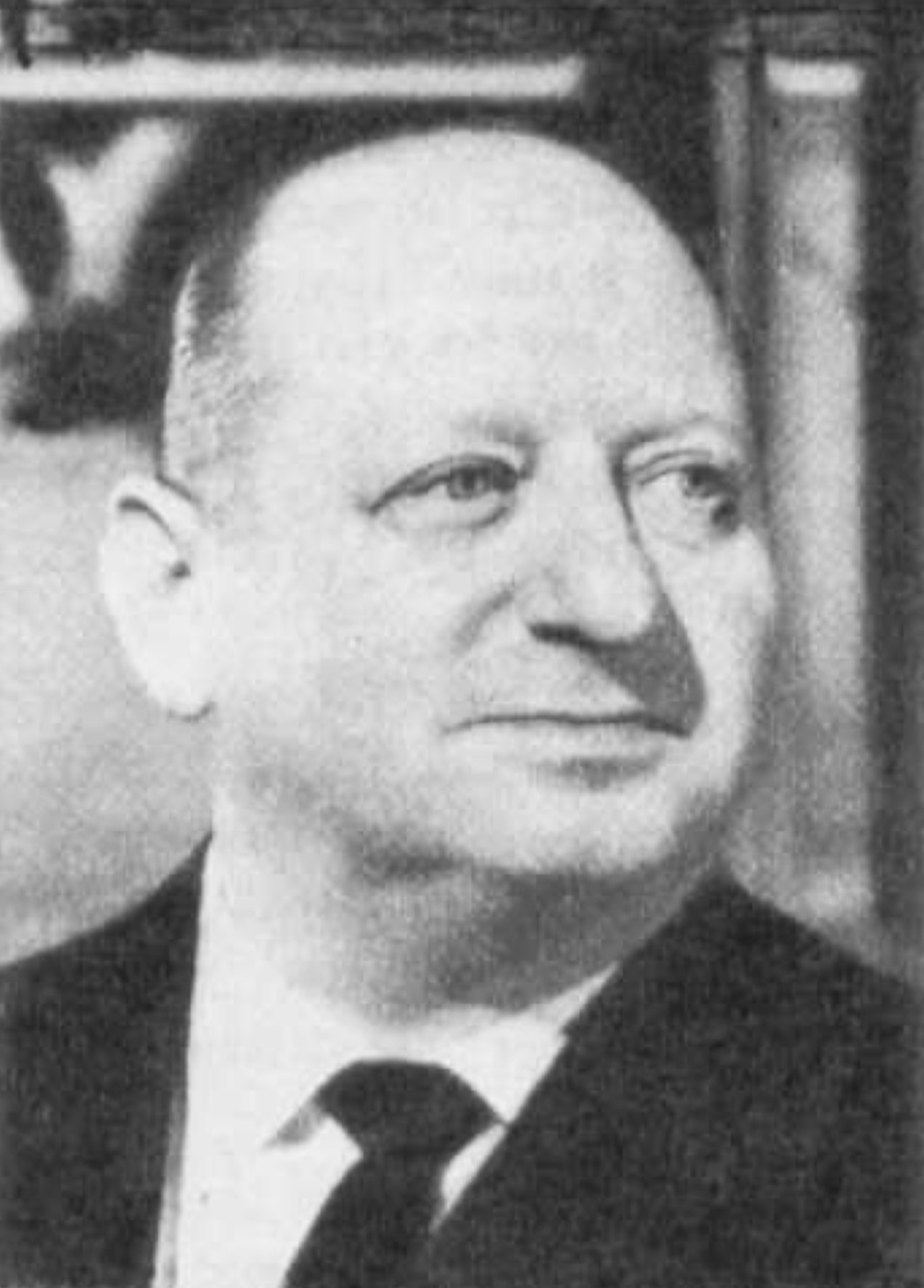
Lew Grade… he was happy to lose a bet

Then on to the stage strolled Lew Grade. “It’s no good,” he said to Ward. “You’ll never be able to do it.”

Stung by this lack of faith. Ward snapped back: “Don’t worry, it’ll be all right.”

“It won’t happen, it won’t happen,” insisted Lew Grade.

“Look, I’ll bet you it will,” said Ward.

“Done,” said Grade immediately.

“What’s the bet?” asked Ward.

“A week-end in Paris, all expenses paid.”

“For my assistant, Frank Beale, as well?” asked Ward.

“Yes. But my money’s safe,” said Grade.

“Needless to say, it wasn’t,” says Bill Ward, now Executive Controller, Elstree Studios of ATV. “I told Frank that there was a bet on and one worth winning. So we did it! And two months later when the first rush of starting ITV had eased off a bit, we had our week-end at the George V hotel in Paris. That’s the kind of man Lew Grade is to work for.”

As Managing Director of Moss Empires, owners of the Palladium, showman Val Parnell later lent his name to the full title of the show which was soon to become famous and which was to uncover so many stars now well known to the public.

“But you know, the idea of putting the show on TV wasn’t mine at all,” says Val Parnell.

“To the best of my recollection, it was Lew Grade’s. Of course, until I retired recently, I took the final decision as to the shape of the show and the artists who appeared on it.

“I’m glad to say we discovered quite a few big names such as Bruce Forsyth, Norman Vaughan and Jimmy Tarbuck.”


The Companies

From the souvenir programme given to attendees at the Guildhall on 22 September 1955

The Associated Broadcasting Company brings to the field of independent television a Board of Directors whose combined experience in public service and entertainment is unrivalled.

A.B.C.’s Chairman, Prince Littler, has occupied a prominent place in the field of entertainment for many years and, among his other directorships, includes that of Moss Empires Ltd., Stoll Theatres Ltd., Associated Theatre Properties and many other theatre-owning and theatre-managing organisations.

A.B.C.’s Vice-Chairman, Norman Collins, a former director of the B.B.C.’s Television Service, has been in the forefront of the battle to bring independent television to Britain and has been closely associated with every stage of its development.

The Members of the Board of Directors and the Management Committee of A.B.C. include: the outstanding figure of the Variety world — Val Parnell; Richard L. Meyer, a pioneer in independent television; Harry Alan Towers, one of the foremost independent producers and distributors of radio and television programmes and Lew Grade — one of Britain’s leading agents and an important figure in the entertainment field.

A.B.C. has been entrusted, initially, with the responsibility of providing the programmes for the London Station on week-ends and for the Birmingham Station, Monday to Friday. It is, therefore, the only independent television programme contractor with a programme responsibility which extends over the whole seven days of the week.

A.B.C. has predominantly turned to the field of experienced technicians and producers and numbers among its staff some of the many whose knowledge of television extends back to its earliest days in Britain.

Heading its Light Entertainment Department is Bill Ward, associated with many of television’s best-known shows. Keith Rogers — another pioneer of television — heads the O.B. side; and, in the initial stages, his responsibility extends considerably beyond the Outside Broadcast field.

Individual directors whose services are available to A.B.C. include Bill Lyon Shaw, Denis Vance, Desmond Davis, Henry Caldwell, Dicky Leeman, Leonard Brett, Stephen Wade, Cecil Petty and many more.

A.B.C. has converted Wood Green Empire — one of the largest suburban Variety Theatres — into one of the most modern and best equipped Television Theatres in the world. It is from here that many of the top Variety Productions of A.B.C. will originate.

In addition, through the interests of its Directors, A.B.C. will have available many of the best known theatres in London and the Provinces, including the London Palladium, whence will originate, each Sunday night a Variety highspot — SUNDAY NIGHT AT THE LONDON PALLADIUM. A.B.C. has recently acquired the British National Studios at Elstree — a fully equipped modern motion picture production centre where many of the television films which A.B.C. is presenting are being made. Through other Directors of A.B.C., the Company has a link with Highbury Studios and Nettlefold Studios — two other centres for the production of television films.

Many of A.B.C.’s major programmes will be produced for it by the Incorporated Television Programme Company Limited, with which Prince Littler, Val Parnell, Lew Grade and Harry Alan Towers are also associated. This Company, founded by public relations expert Suzanne Warner, adds further show-business strength through members of its Board, who include Hugh Beaumont, of H. M. Tennent Limited, Stuart Cruikshank of Howard & Wyndham Theatres, Phillip and Syd Hyams of Eros Films, John Schlesinger of the Schlesinger Organisation and Anthony Gishford of Boosey and Hawkes Limited.

The nerve centre of A.B.C.’s week-end operation is the modern control centre at Foley Street, London, within 200 yards of Museum Exchange — the nerve centre of the micro-wave and coaxial cable linking system of the G.P.O.

A.B.C. will also be developing a studio centre in Birmingham.

These are some of the personalities and facilities which together, will be ensuring that A.B.C. T.V. fills an important role in the pioneering and development of independent television in Britain.


Note: after less than a month on air and following a court battle with the Associated British Picture Corporation who owned the ABC cinema chain, Associated Broadcasting Company Ltd was renamed Associated TeleVision Ltd (ATV). It is not related to ABC Weekend Television, who provided the programmes at weekends in the Midlands and the North from 1956-1968, who were a subsidiary of the Associated British Picture Corporation.